

Barclays Center Limo Service: Stress-Free Rides
July 10, 2026
Subway to Yankee Stadium: The Complete 2026 Guide (And When It’s Not Actually Your Best Option)
July 11, 2026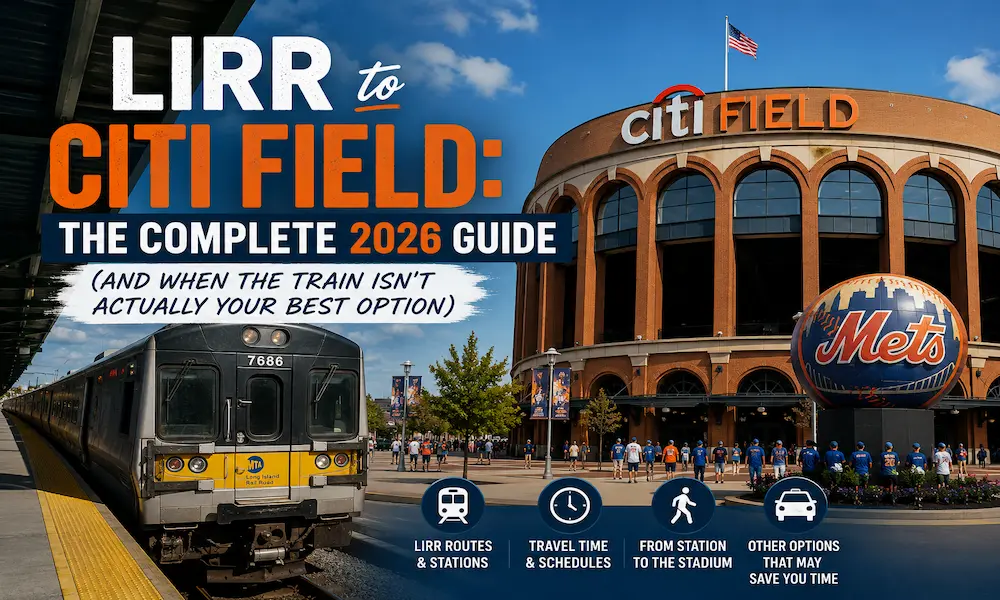
If you’re heading to a Mets game this season, the short answer is this: the LIRR drops you at Mets-Willets Point station, which sits right across the footbridge from Citi Field’s Left Field Gate, and the ride from Penn Station takes about 18 to 20 minutes on the Port Washington Branch. That part is genuinely convenient. What most guides don’t tell you is what happens the moment 41,000 people try to catch the same train home at the same time, or what your actual options look like if you’re traveling from New Jersey, Connecticut, or anywhere off the Port Washington line.
We put together this guide after digging through the official MTA and Mets transit pages, current 2026 fare and parking numbers, and a good number of fan complaints buried in forums and reviews. Here’s everything you need to actually plan around, not just the textbook version.
Where the LIRR Actually Drops You Off
Mets-Willets Point is the only LIRR station built specifically to serve the ballpark. It sits on the Port Washington Branch, and once you step off the platform, it’s a short walk across a pedestrian boardwalk toward Flushing Meadows Corona Park before you reach the stadium. You’ll come out near the Left Field Gate area, which is close to the rotunda entrance most fans use.
It’s a flat, easy walk in good weather. In a downpour or a Queens summer heatwave, it’s a lot less pleasant, and that’s worth keeping in mind if you’re bringing kids, older relatives, or anyone who’d rather not stand around exposed while a line forms at the gate.
Getting There: LIRR Routes From Every Direction
Not everyone is starting from the same place, so here’s how the trip breaks down depending on where you’re coming from.
From Penn Station or Grand Central Madison: This is the most direct route. Board any Port Washington Branch train and you’ll be at Mets-Willets Point in roughly 18 to 20 minutes, with no transfers.
From other LIRR branches (Long Island, southern Queens): If your local station isn’t on the Port Washington line, you’ll need to change trains at Woodside. That transfer adds a few minutes but it’s straightforward, since Woodside to Mets-Willets Point is only about a five-minute ride.
From the North Shore of Nassau County: Fans coming from Great Neck are looking at around 17 minutes, and Port Washington itself is closer to 27 to 28 minutes.
From New Jersey: There’s no direct line, so the standard route is NJ Transit into Penn Station, then a transfer to any Port Washington Branch train. It works fine, but you’re adding a connection and a walk through Penn Station on a day when it’s already crowded with fellow fans.
From Connecticut: This is where the train stops being convenient. You’re either taking Metro-North into Grand Central and switching to the subway or LIRR, or catching one of the limited daily bus options into Manhattan first. Either way, you’re looking at a two-hour-plus journey with multiple connections, which is a very different experience than a 20-minute hop from Penn Station.
If you’re flying into the city for a weekend series, this is also where it helps to plan the whole trip end to end rather than just the last leg. Fans coming through JFK often build in a private ride straight from the terminal using something like our JFK to Manhattan transportation guide, then figure out the ballpark leg separately. It’s usually smoother than trying to string together AirTrain, subway, and LIRR connections with luggage in tow.
LIRR Fares to Citi Field: What You’ll Actually Pay
A one-way ticket from Penn Station to Mets-Willets Point generally runs somewhere in the $4 to $9 range depending on whether you’re traveling peak or off-peak, and whether you buy your ticket on the MTA app in advance or pay a walk-up fare. For a family of four making a round trip, that adds up faster than people expect, especially once you add the return leg after the game.
One thing worth knowing about: the LIRR offers a Family Fare promotion for Mets games, where kids between 5 and 17 can ride for $1 each when traveling with a fare-paying adult. It has to be requested in advance through the LIRR promo system before midnight on game day, so it’s not something you can grab last minute at the station. If you’re bringing the kids and planning ahead, it’s genuinely worth the small amount of paperwork.
Game Day Timing: What the Schedule Actually Looks Like
Trains on the Port Washington Branch run roughly hourly outside of peak commuting windows, which is fine heading into the ballpark since you can plan around a specific first-pitch time. The tighter squeeze happens on the way out.
After the final out, the LIRR adds extra service, mostly heading back toward Penn Station via Woodside, with occasional additional trains to Grand Central or Port Washington depending on demand. That sounds reassuring on paper. In practice, it means a station platform packed shoulder to shoulder with thousands of fans all trying to board within the same 20-to-30-minute window. If the game runs long, goes to extra innings, or ends on a walk-off with the whole stadium still buzzing, you could be standing on that platform for a while before you actually get on a train.
This is the part most transit guides skip entirely, and it’s usually the moment fans start wishing they’d made other arrangements.
When the Train Makes Sense, and When It Doesn’t
The LIRR is a solid choice if you’re coming solo or as a pair from Penn Station or Grand Central Madison, you don’t mind standing in a crowd after the game, and the weather’s cooperating. It’s cheap, it’s direct, and there’s no parking to deal with.
It starts to make less sense in a few specific situations. If you’re traveling with young kids who’ll be exhausted by the ninth inning, if you’ve got a group of six or more trying to stay together through a packed platform, if you’re coming from Connecticut or New Jersey and don’t want two or three connections each way, or if you’re hosting out-of-town clients and want the evening to feel effortless rather than logistical, the train stops being the easy option and starts being the thing you have to plan your whole night around.
The Other Ways to Get There
Subway (7 train): The 7 train also stops at Mets-Willets Point and connects through Manhattan at Times Square, Grand Central, and other stops along the way. It’s a solid budget option if you’re already near a 7 train stop, though it faces the same post-game crush as the LIRR.
Driving and parking: Citi Field runs prepaid and walk-up parking, with prepaid lots typically running around $40 and walk-up rates closer to $50, sometimes higher depending on the lot and the event. Add in pregame traffic on the Grand Central Parkway and a postgame exit that can take 30 to 45 minutes just to clear the lot, and driving often ends up costing more time than it saves.
Rideshare: Uber and Lyft have a designated pickup zone near the Left Field Gate. It’s a reasonable option on a quiet weeknight game, but surge pricing during high-demand games (think Subway Series weekends or playoff nights) can push fares well past what you’d expect, and you’re still competing with a huge crowd for the same handful of cars.
Private car or limo service: This is where a lot of regular ticket holders and season plan holders end up once they’ve done the LIRR-and-crowd routine a few times. A private ride gets you dropped and picked up at a set time and location, no platform crush, no surge pricing, no hunting for a parking spot.
LIRR vs. Rideshare vs. Driving vs. Car Service: A Straight Comparison
| Option | Typical Cost (round trip, per person) | Travel Time from Manhattan | Post-Game Wait | Best For |
|---|---|---|---|---|
| LIRR | $8–$18 | 18–20 min | Can be 20–40+ min in a crowd | Solo riders, pairs, budget trips |
| Subway (7 train) | ~$5.80 | 25–35 min | Similarly crowded | Fans already near a 7 stop |
| Driving + Parking | $40–$60+ (parking alone) | 20–40 min depending on traffic | 30–45 min to exit lot | Fans who need a car anyway |
| Rideshare | $25–$70+ (surge-dependent) | 20–35 min | Long waits, surge pricing | Small groups on off-peak nights |
| Private Car/Limo Service | Flat rate, no surge | 20–35 min, scheduled | None, driver waits for you | Families, groups, corporate clients, big games |
The train wins on pure cost for a solo rider. It loses ground fast the moment you’re traveling as a family, a group, or you simply don’t want your night to end standing on a crowded platform waiting for a train that may or may not have room.
Why Groups and Families Increasingly Skip the LIRR for Game Day
We hear the same reasoning from clients pretty often. A family with two kids under ten doesn’t want to navigate a packed platform at 10:30 at night after a night game runs long. A group of eight friends doesn’t want to split up because trains and rideshares can’t fit them all at once. A business heading out for a client outing wants the evening to look effortless, not like a logistics exercise.
That’s really the appeal of booking a car service to Citi Field directly. You get picked up from wherever you actually are, whether that’s an apartment in Manhattan, a home in Westchester, or a Long Island town nowhere near a Port Washington Branch station, and you get dropped right near the gate. After the game, your driver is already there. No standing in line, no checking an app for surge pricing, no walking a mile because you parked in the cheap lot.
If you’re coming from the island itself, this is especially useful, since a lot of towns require a transfer at Woodside to even reach the stadium by train. Our Long Island limo service covers door-to-door pickups for exactly this kind of trip, and it skips that connection entirely.
For families traveling with young children, comfort and safety matter more than shaving a few dollars off the fare. If you need a properly installed car seat for a toddler, it’s worth checking our baby car seat limo service guide before you book, since not every service handles that correctly.
And for corporate outings, which are more common at Citi Field than people realize given how many companies use Mets games for client entertainment, a private ride keeps the whole evening feeling professional from pickup to drop-off. Our corporate travel service is built around exactly that kind of scheduling reliability.
If you’re trying to figure out how many people can actually ride together, our breakdown on how many people a limo seats walks through vehicle sizes so you can pick the right one for your group instead of guessing. And if budget is the deciding factor between a car service and stacking up LIRR tickets plus a rideshare home, our guide on how much a limousine costs per hour breaks down real 2026 pricing so you can compare it honestly against what a group of five or six would actually spend on the train and a surge-priced ride home.
A Few Practical Tips for Game Day, However You Travel
Citi Field is a cashless venue, so have a card or mobile payment ready if you’re paying for parking or anything at the gate. Backpacks are restricted under the stadium’s bag policy, so check the current rules before you leave the house if you’re bringing one. If you’re using rideshare or a private car, the official pickup zone is near the Left Field Gate off Shea Road and Boat Basin Place, and exiting through the Left Field Gate rather than the Right Field or K Korner gates will save you a noticeably longer walk.
It’s also worth noting that LIRR service can occasionally be disrupted around major events or labor situations, as happened briefly around a recent Subway Series weekend. When that happens, the Mets and MTA typically roll out shuttle bus alternatives, but availability is limited and unpredictable. Having a backup plan that doesn’t depend entirely on train service running normally isn’t a bad idea if you’re going to a high-stakes game you don’t want to miss the start of.
Frequently Asked Questions
Does the LIRR go directly to Citi Field?
Yes. Mets-Willets Point station on the Port Washington Branch is a short walk from the Left Field Gate, and it’s served directly from Penn Station and Grand Central Madison without a transfer.
How long does the LIRR take from Penn Station to Citi Field?
About 18 to 20 minutes on a direct Port Washington Branch train.
How much does the LIRR to Citi Field cost?
Typically between $4 and $9 one way depending on peak or off-peak timing and how you purchase your ticket, plus the return fare for the trip home.
Is there a discount for kids taking the LIRR to a Mets game?
Yes, the LIRR’s Family Fare lets kids aged 5 to 17 ride for $1 each with a fare-paying adult, but it needs to be requested in advance before midnight on game day.
What’s the best way to avoid the crowd after a Mets game?
Leaving a few minutes before the final out helps, but the more reliable fix is booking a private car service with a set pickup time, since your driver waits for you instead of you waiting in a line with everyone else.
Is it better to drive or take the LIRR to Citi Field?
For a solo rider or a pair, the LIRR is usually cheaper and less stressful. For groups, families, or anyone who doesn’t want to deal with parking rates of $40 to $50-plus and a slow exit from the lot, driving tends to cost more in time and money than it saves.
Can I book a car service to Citi Field for a large group?
Yes. Vehicles range from sedans for two or three passengers up to larger SUVs and vans for bigger groups, so you’re not forced to split up across multiple rides.
Getting to the Game Should Be the Easy Part
The LIRR works well for a straightforward, solo trip from Penn Station. It gets a lot less appealing once you factor in a family, a group, bad weather, or a late finish that leaves you standing on a crowded platform. If you’d rather skip the guesswork entirely, book a ride with All Comfort Limo and get picked up from your door and dropped right at the gate, no transfers, no surge pricing, no standing around after the last out. Take a look at our fleet options to find the right fit for your group, or reach out to our team if you want help planning transportation for a whole day at Citi Field, a Subway Series weekend, or any other event on your calendar this season.